Proposal for a predictive model of the proton
Background
The equation corresponding to Bohr’s magneton used for the calculation of the intrinsic magnetic moment of the electron is not applicable for the proton because it is a composite particle with a certain structure.
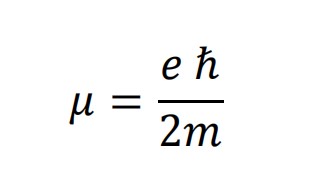
At the beginning of Quantum Chromodynamics, researchers assigned charge and mass values to three particles, which they called quarks, to make the Bohr magneton equation compatible with the experimental values of the magnetic moment of the proton.
This initial mathematical conclusion, by adjustment and not predictive, with particles of different masses and fractional electric charges, provides a good accuracy of 0,25% but predicts neither radius, nor shape, nor type of movement and lacks physical significance.
The current improved models predict values with accuracies in the order of 3%, but without an exact formula.
Summary description of the model and mathematical development
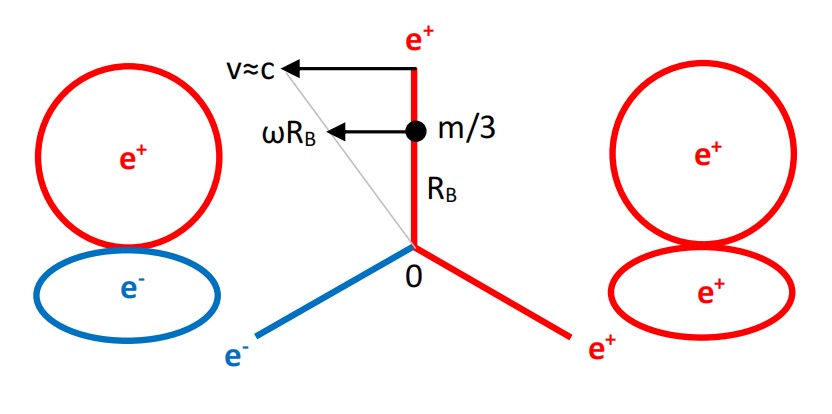
It is a system composed of three similar particles e + e + e – with a mass equal to a third of the proton (m/3) and an electric charge (e) equal to that of the electron, but with different signs, which symmetrically arranged describe a circular orbit with an angular velocity of rotation (ω), with the center of action of charge and mass being located at a distance (RB) of the center of rotation (0). The system is kept stable by strong centripetal interaction.
The sum of the intrinsic magnetic moments of the three particles is zero.
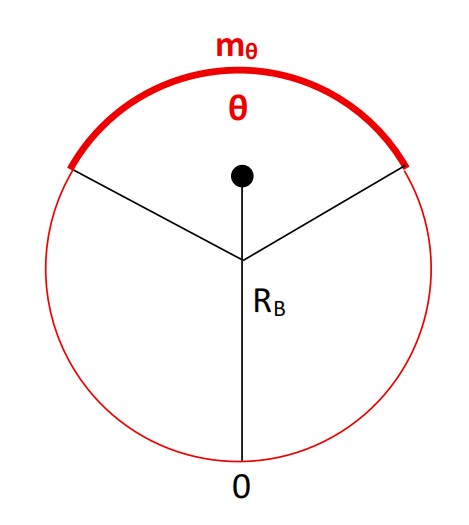
Expression for the calculation of the radius of the intrinsic spin orbit of each of the three particles e + e + e – (MATHEMATICAL DEVELOPMENT Calculation of the turning radius)
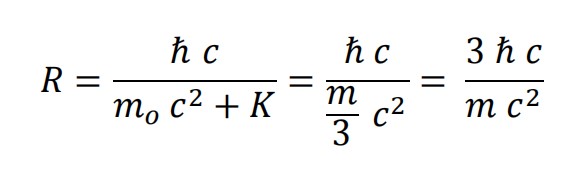
Illustration only (intrinsic rotational speeds not represented)
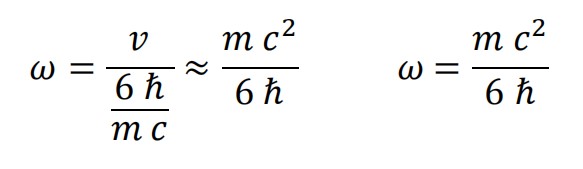
Expression for calculating angular velocity of rotation
A portion of the particle’s mass (mθ) accumulates in a circumferential arc (θ) represented by a thick stroke and the remaining portion is located along the thin arc of fine stroke whose angle is (2π-θ).
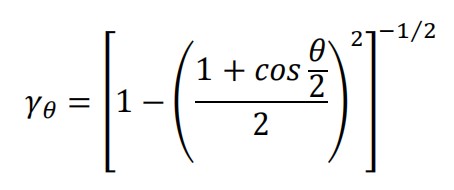
Expression to determine the value of γθ
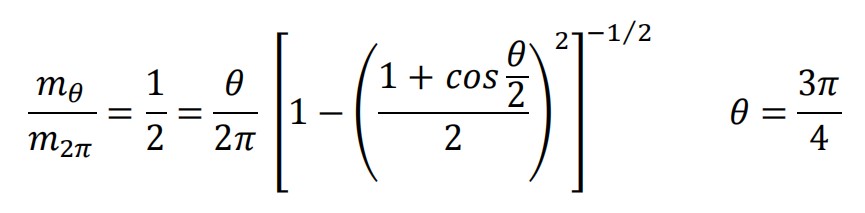
The center of action of mass and electric charge coincides with the barycenter of the system. Calculation of θ
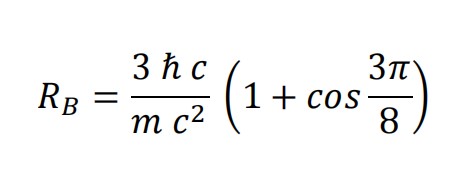
Expression for the radius of rotation of the center of action of mass and electric charg
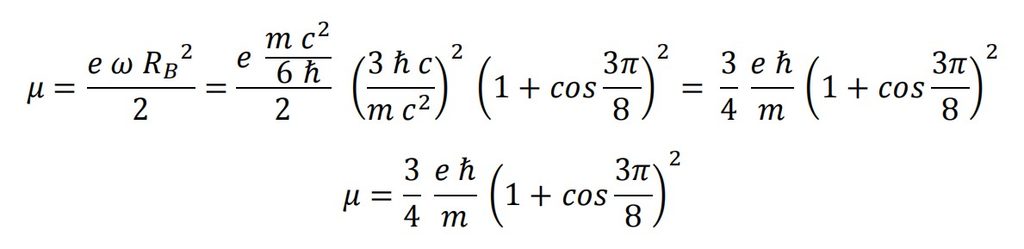
Magnetic Moment Calculation
Conclusion
By means of a predictive method based on the decrease in the size of the electron with the increase of its kinetic energy and the value of the radius of rotation of the center of action of mass and electric charge of the system, calculated by the barycenter method, a mathematical expression has been developed for the calculation of the magnetic moment of the proton compatible with the experimental results with an error of 2,7%.
As the accuracy obtained is comparable to the accuracy of current models, the proposed model is considered valid to be evaluated in a next stage with the requirements and procedures corresponding to a new line of research.
A theory about the structure of the neutron
Background
The neutron is a hadron that is part of the atomic nucleus, it was theorized in 1920 and discovered in 1932. It has a mass of 939,565 MeV/c2, a zero electric charge, a magnetic moment of -9,662×10-27 J/T and a spin of 1/2.
It is stable only inside the atomic nucleus. As a free particle it is unstable decaying into a proton, an electron and an electron antineutrino, with a half-life of 879 s.
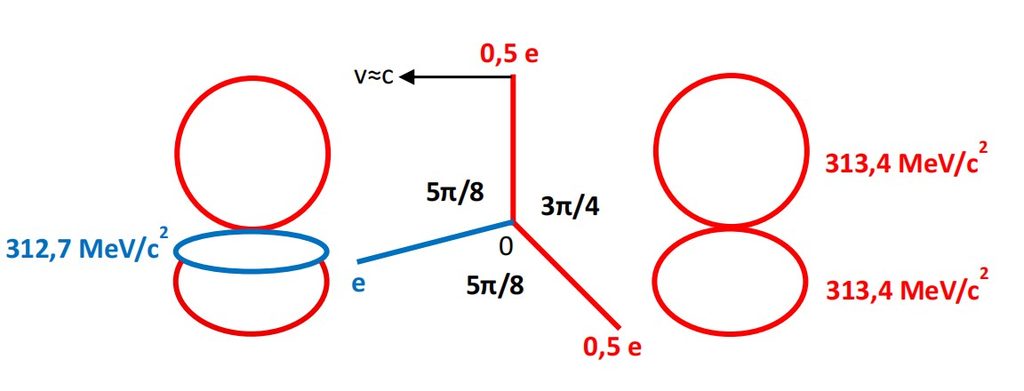
Statement of the theory and graphical representation of the structure for illustrative purposes only
The neutron is considered to be the result of the endothermic combination between a proton and an electron.
An electron with a minimum kinetic energy of 0,782 MeV combines with the two positive particles of the proton transferring to each of them half of its electric charge and energy, the negative particle does not modify either its mass or its electric charge. The positive particles increase their energy to 313,4 MeV and decrease their electric charge to 0,5 e.
The three particles are not arranged symmetrically. The angular lag between the positive particles is 3π/4 rad and the negative particle is located at 5π/8 rad from the respective positive particles.
The sum of the extrinsic magnetic moments of the three particles is zero.
The sum of the intrinsic magnetic moments of the three particles will correspond to the observed magnetic moment. Its value is -9,367×10-27 J/T, which represents an error of 3%.
A theory about the nature of the photon
Background
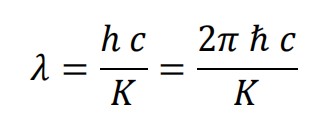
At present, basically, the photon is considered to be an elementary particle that carries the minimum amount of energy of an electromagnetic field. It is a boson with zero mass at rest and zero electric charge, spin 1, velocity of propagation in the vacuum c equal to 299792458 m/s, with an associated wave whose length λ is the quotient between the product of Planck’s constant h multiplied by c and the energy K it carries
Statement of the theory, illustrative representation of the structure only, and examples
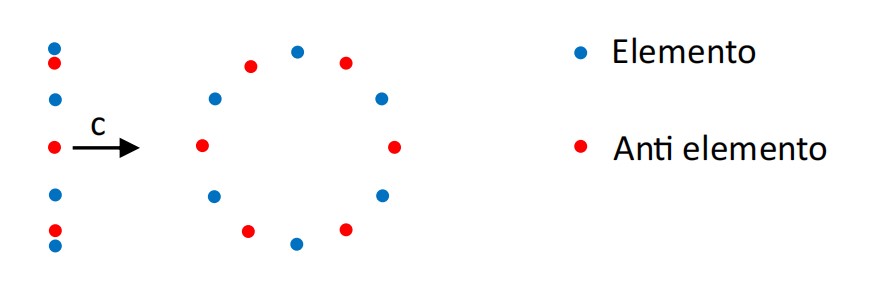
The photon is considered to be the result of the stable bond between n elements with a negative electric charge and n anti elements with a positive electric charge (section HOME Statement of the Hypothesis).
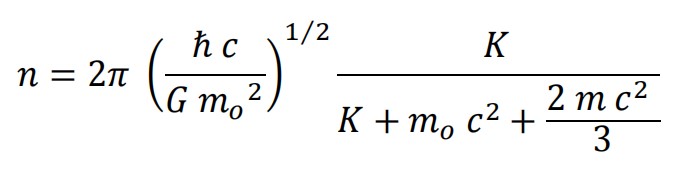
The value of n is the product of the normalized number of elements that make up the electron 2𝜋(ℏ𝑐 /𝐺𝑚𝑜 2)1⁄2 by the quotient between the energy of the photon and the sum of the relativistic energy of the electron plus two-thirds of that of the proton
Drawing only illustrative of the photon structure (intrinsic spin not represented)
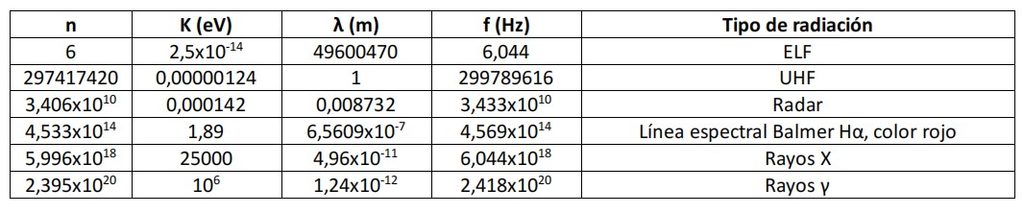
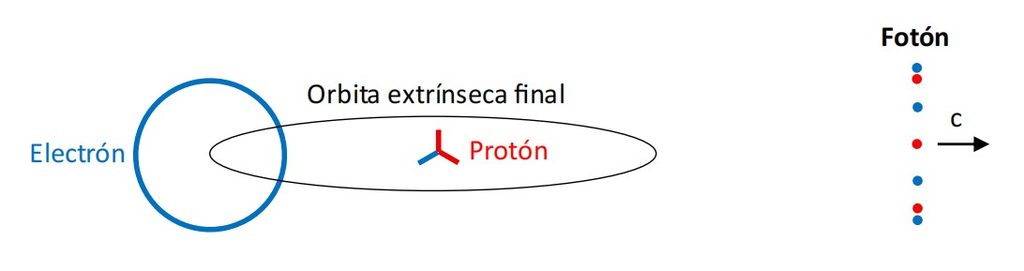
Simplified analysis of the mechanism of photon formation by transitioning the electron of the hydrogen atom to lower energy levels (graphical representations for illustrative purposes only)
Initial phase corresponding to the progressive deformation and decrease of the radius R of the intrinsic orbit of the electron due to the effect of the increase in its kinetic energy K as it approaches the proton (MATHEMATICAL DEVELOPMENT Calculation of the turning radius) and expulsion of elements that are directed towards the proton attracted by the anti-elements it contains.

Final phase corresponding to the stable combination between the elements ejected by the electron and the same number of anti-elements contained in the proton, giving rise to the photon that is expelled towards the outside of the atom with a velocity c and a certain kinetic energy K. The process ends with the stabilizations of the intrinsic and extrinsic orbits of the electron that will orbit at a shorter distance from the proton depending on the corresponding final energy level.
A Theory about the Nature of the Neutrino
Background
The neutrino is a very difficult particle to detect. Its existence was theorized in 1930 and discovered in 1956, it is a fermion with a very small mass (< 0,4 eV/c2 ) and zero electric charge that practically does not interact with matter due to its extremely low effective section of 10-20 barns (10-44 cm2 ) compared to the much higher values of 0,21 barns photons and 104 barns of electrons. Reference energy 1 MeV for all cases.
Strictly speaking, an elementary fermion such as the neutrino must have an electric charge to avoid gravitational collapse and the formation of a singularity. Currently, the concept of the neutrino’s milli charge is used to assign it a very small electric charge compatible with the rest of the properties observed.
Values currently estimated for the neutrino milli charge in multiples of the electron charge e

Theory Statement
The neutrino and antineutrino are considered to be fragments of electrons and positrons which are expelled by the atomic nucleus as products of various exothermic reactions with velocities practically equal to the speed of propagation of light in the vacuum c. Its electric charge and mass at rest are inferior to a trillionth (10-12) of the electron.